
Día 7
Día 7 · martes
Art i Història
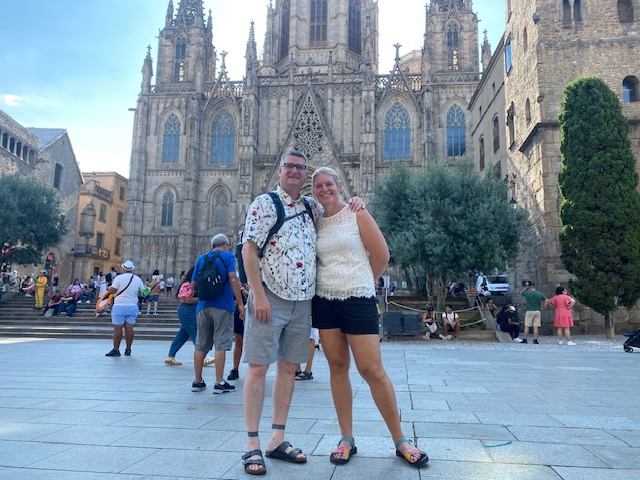
Went for a run this morning down to the beach. The beachfront was restored before the 1992 Olympics here. There’s a decent sized sandy beach separated from the port closer to the old town. Folks are playing volleyball, jogging, and walking in the morning breeze. On my way back to the apartment, I grab coffee and croissants. We get going and take a cab back to Plaça de Catalunya to meet María for our tour of the Gothic and El Born neighborhoods. She gives us a lot of history on the original Roman city (el Gothic). She shows us the Barcelona Cathedral and Plaça Nova while explaining how the Roman walled city eventually became the modern neighborhood. Some of this area is the edge of the old Roman wall and some parts of those ancient walls are still here. The Roman’s did love to build a wall around their towns.
We wind around to Plaça Sant Jaume, which was once the Roman Forum. The center of the old city was the seat of power, and still is. The buildings on either side of this square are the Generalitat of Catalonia and City Hall. Basically the regional and city governments.
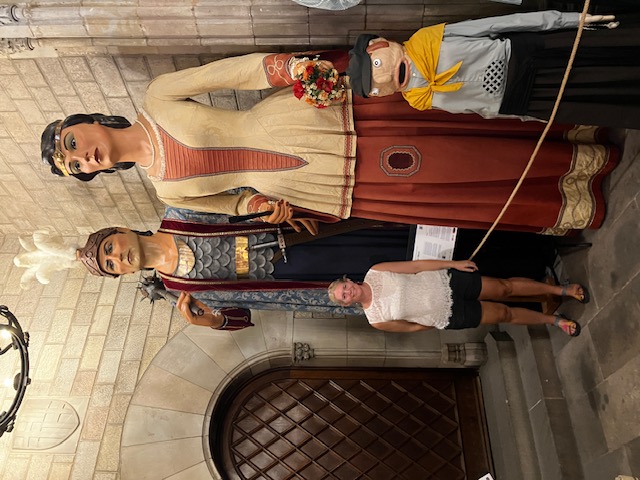
City hall is open to walk into and Maria tells us about Els Gegants, the Giants, huge papier-mâché figures on display here that people wear and parade through town during Mercè, the large festival that’s next weekend. Each neighborhood has their own figures, some for adults and smaller ones for kids. I remember reading about it and was sad I couldn’t make the dates work with the regatta. As much as I’d love to, I can’t spend the whole month here.
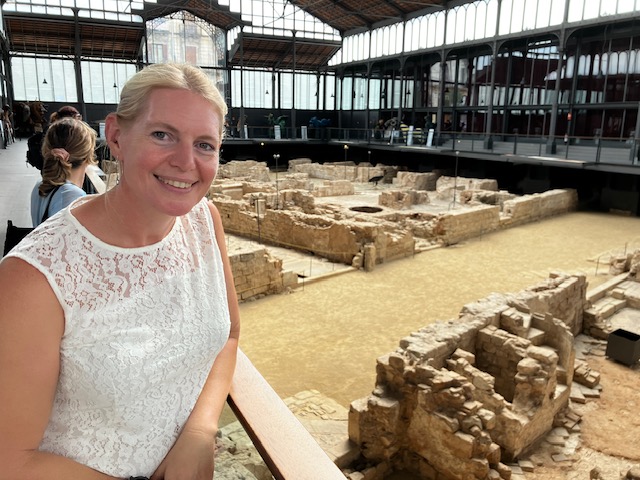
Nearby, we pass through Plaça del Rei and stop into MUHBA, the city’s history museum. It was once a large market and during a renovation they found the remains of Barcino, the Roman era town. Now there are elevated paths inside the old market exterior that allow you to walk over the ruins. It reminds me of the long house we saw in Iceland in a museum that had intended to be a parking garage before finding a 12th century home.
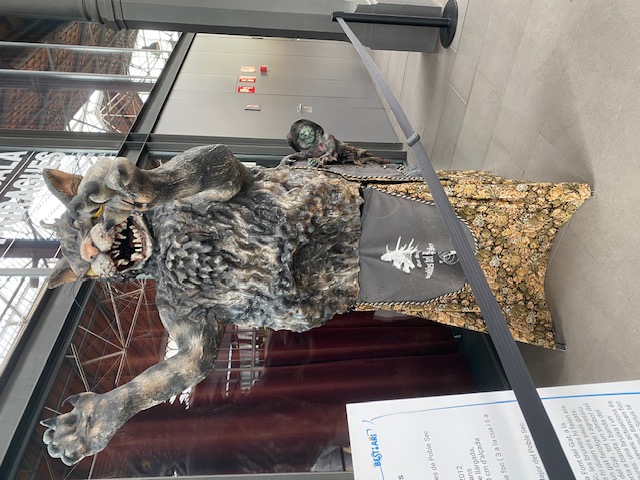
Inside are also more figures for Mercé. Bestiari de Foc, Fire Beasts, are lined up along the walls. These are mostly animals instead of more human shapes and have metal rods attached at the front with clips. Maria tells us that they attach fireworks that are set off as they parade around. Again, each barrio has their own, so all of Barça is represented.
We wind through the Gothic streets, just large enough for a small car, curves and random alleys turn away. We come to a small square with a big history. Plaça Sant Felip Neri now has a school and a few local businesses, but Maria tells us the terrible story of the orphanage that was bombed here during the Civil War. When the damage was cleared, few walls remained, but those that did were left with the scars of the war to mark the tragedy.
We move back towards La Rambla and find Mercat de la Boquería, a traditional market filled with stalls of fresh seafood, meats and vegetables. Maria has been explaining how fewer snd fewer locals live in these neighborhoods. Tourists don't buy fresh goods to cook, and so more and more of these stalls serve ready to eat foods.
As we move along now crossing into El Born, the architecture modernizes some. We have clearly left the Roman city, but there is still so much character in this barrio. We find another old market, El Born CCM with its beautiful iron structure outside. Once inside, however, there are again ruins of an older city. A renovation to create a parking garage here encountered the buried neighborhood of La Ribera. When Barcelona was captured by king Phillip V in the 18th century, a large area of homes and streets were buried here to build a royal fortress. A century later the fortress was abandoned and the market built here. Now these excavated ruins serve as a symbol of Catalan identity. There are several points where we’ve seen the history of the Spanish central government forcing violent control over Catalan. The weight of this history is visible in the pride of the people here.
We pass quickly through the art district of El Born including many galleries and the Picasso museum. We will be back here this afternoon. Our tour ends at Basilica de Santa Maria del Mar. This is the people’s church, built in only 55 years compared to the 600 years it took to complete Barcelona cathedral. It’s still beautiful, but simpler and more welcoming.
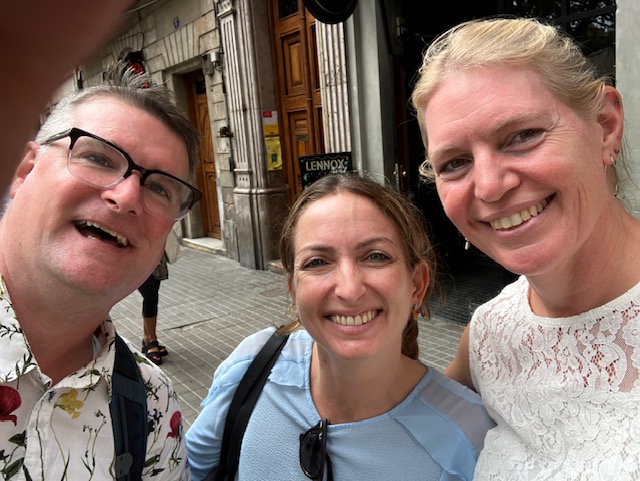
We say goodbye to Maria, but she offers that we have a friend in Barça. We can message her with any questions. Plus we have her restaurant guide that we’re eating and drinking from almost exclusively. We walk down to the port and gawk at the yachts and cruise ships. We stop for cava at Merendero de la Mari and relax, people watching. Back in Born is the art district. We have tickets for the Picasso museum and check out some galleries along the way. There are some fantastic local artists and some amazing work on display. The Picasso museum is housed in an old home from the city’s earlier wealthy elite. Maria explained that the upkeep on these buildings became so overwhelming that the families donated or sold them to the city for other uses. There’s so much history in need of upkeep in this town. You can see that some places seem to be in hold, a netting wrapped around fragile towers or stained glass while that piece waits for its turn at restoration. The museum itself is mostly his early work and history about the master. There are larger collections of Picassos in many other cities, but it’s interesting to see more realistic works of his and see how good he was as a painter by his mid teens. A few doors down is the MOCO museum, the modern art collection including some Warhols and Banksy-authorized prints. This museum is much smaller, but worth it to contrast the time periods in such a small neighborhood. As we start to make our way back across the city, Mike finds us some places to stop by along the path. We are going by Maria’s expansive Google map of restaurants. She has places marked all over Barça as well as several other cities in Spain and Portugal. It is really comprehensive. They are all local places and often patronized by locals more so than tourists.
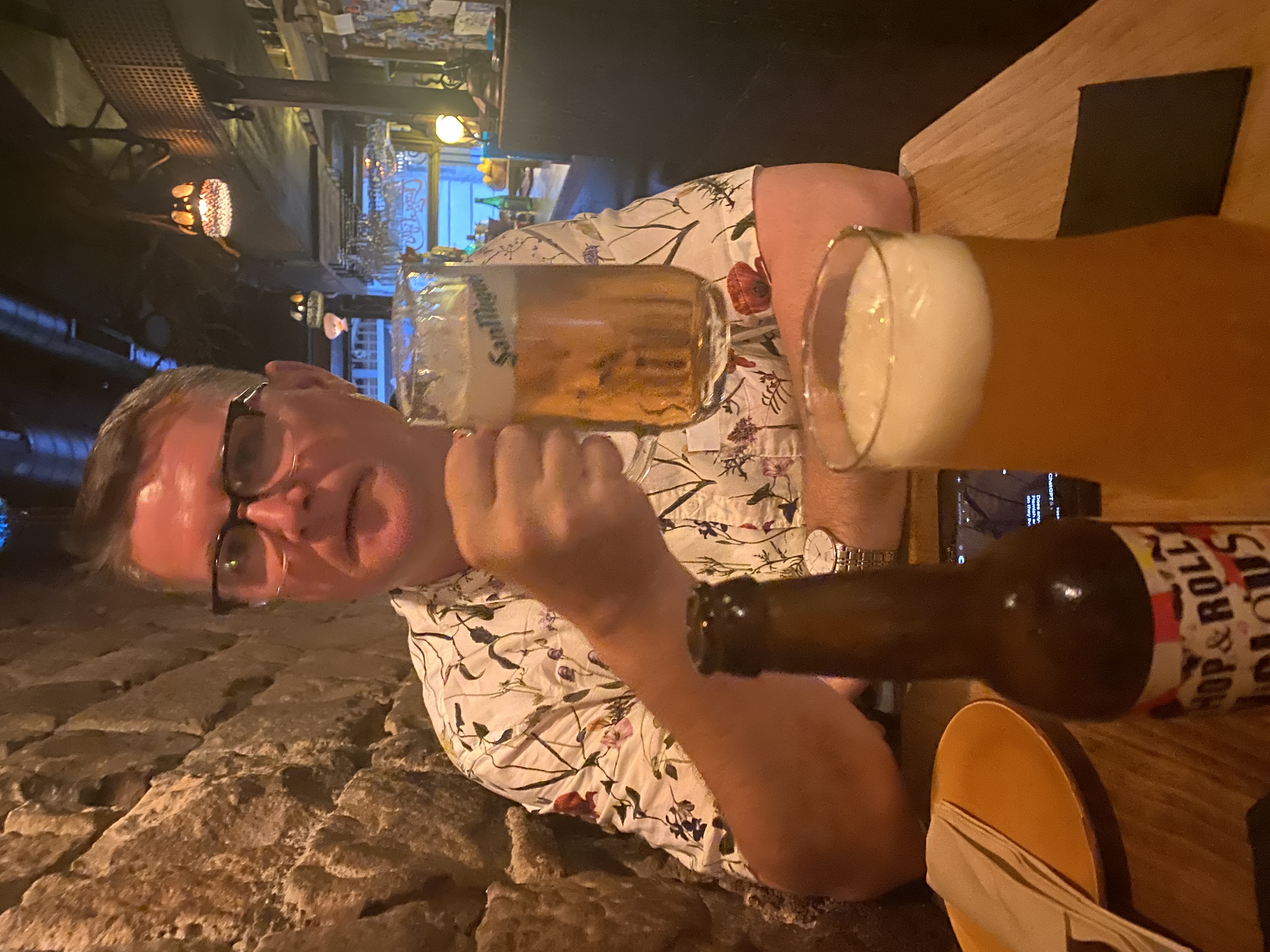
We find L’alcoba Azul tucked into the bottom floor of an old building. While many of these restaurants are small, this one can’t be ten feet wide. Yet they have packed in plenty of tables and a great atmosphere. It’s divey but in the best way, and the staff are super friendly. We ask the waiter to pick three tapas for us. He returns with some of the best pork I’ve ever had, goat cheese stuffed peppers, and octopus. All delicious! This place sits high on my list of would-be-my-neighborhood-bar.
Step count: 28230